
Student Assistance
I work hard to ask the kinds of questions that prompt students to find their own answers

I am currently teaching an undergraduate section of my favorite course, Black Women’s Writing and Rhetoric. Today we began our discussion of Ntozake Shange’s For Colored Girls, the only text to remain on every iteration of the class syllabus since I created this course in 2011. I figured out years ago that students benefit from seeing the choreopoem acted out, so we screen the PBS Playhouse version and talk about each poem. Those conversations tend to be some of my favorite of the semester.
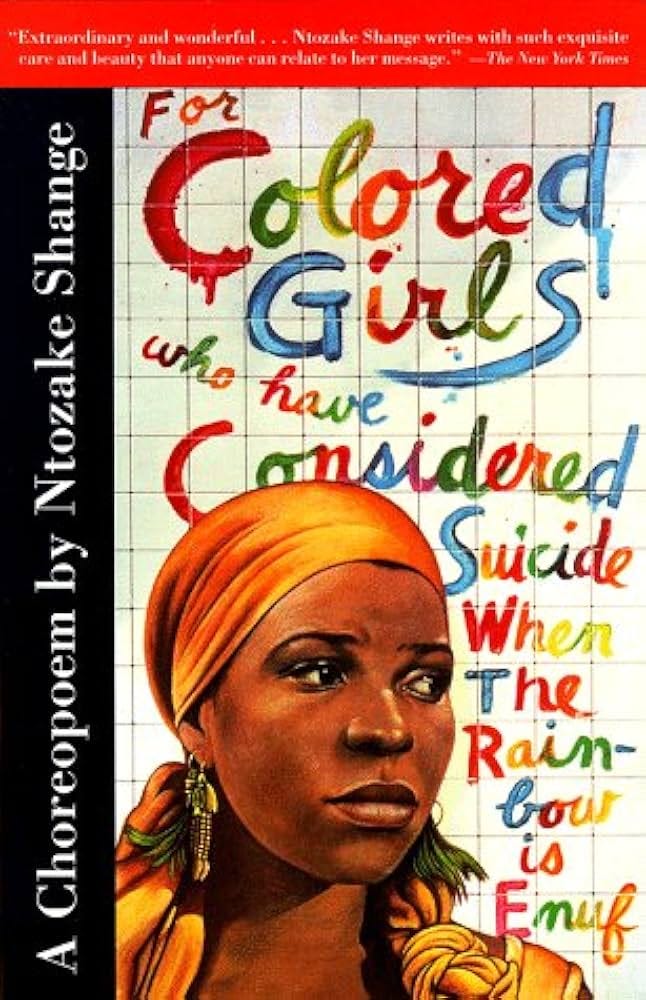
In recent years, I’ve been surprised to see how students bring new concepts into our discussions of the various poems. For instance, last semester a student made a fairly convincing argument that we should see the speaker of “Te amo mas que” (“I love you more than”) as a young woman in a parasocial relationship. I’d always started our conversation about “Te amo mas que” from a cultural standpoint, pointing out how the speaker conveys an Afro-Latina perspective in one moment and then transitions into an Afrocentric perspective by the poem’s end. The idea that the speaker’s irritation over Willie Colon’s absence from the party she was attending was an indication of her over-investment in a figure she does not know still sticks with me.
Why am I sharing all of this?
Well, today during our discussion of “No Assistance,” the poem where Lady in Red describes her frustration with what seems like unrequited love, a student made the case that the speaker was in a “situationship.” The student pointed out for us how Lady in Red claims she “waz” carrying out “an experiment” as if she was trying to convince herself that she had some control over the lack of relationship. Soon, a new thread of the conversation emerged about whether sidepieces have agency or not. I couldn’t dispute the student’s argument. I had no reason to try. A group of students who are ordinarily quick to call a text old or outdated took over the rest of the conversation for the remainder of class.
These are some of the moments that make teaching such a rich and fulfilling experience for me. I’ve never thought I need to have all the answers when I walk into a class, but I work hard to ask the kinds of questions that prompt students to find their own answers. And, in turn, through our discussion of timeless Black feminist text, my students teach me.